
The good-enough helper
How I used AI to work on my book

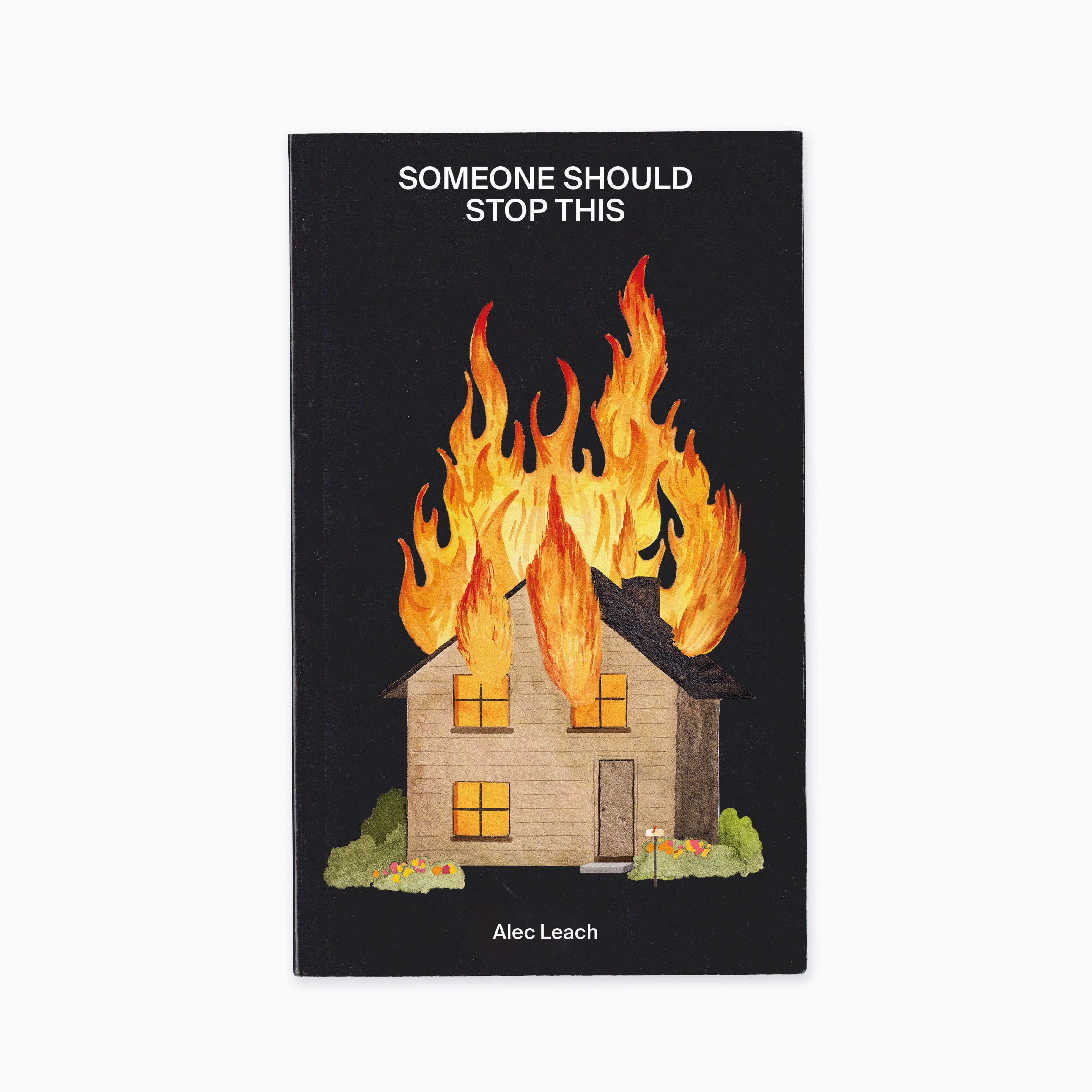
Last week, we sent off the print files for Someone Should Stop This, my book connecting the dots between climate change, dysfunctional economics, online echo chambers and far-right politics. I gave it a final read-through the day before record-breaking heatwaves turned Berlin into an oven. Thanks to everyone who’s preordered a copy so far. You can do that here.
I said I’d tease some chapters from the book, but that’s been put on hold while we do PR. So instead I thought I’d wade into the writers-using-AI debate by talking a bit about how I used AI to write the book. This isn’t some gotcha where I’m going to spend hundreds of words leading up to a sarcastic grand finale where I say that I actually didn’t use AI at all. I did use ChatGPT in the process of writing the book. It was helpful in some ways, useless in others. I did not use AI to do any actual writing for me, except for part of one sentence which ended up getting cut anyway (my head was fried at that point).
The LLM debate has revealed the divide between two kinds of writing. There’s the process of communicating information: journalism, press releases, product descriptions, scientific papers. A reporter’s job isn’t to put together beautiful sentences, it’s to find out what’s going on in the world and to tell the rest of us about it. This is the kind of writing where automation makes a lot of sense: we can assume that biologists would be happy to spend less time writing papers, and more time doing the actual biology. When Joe Weisenthal tweets that in the future, not using an LLM to write will be like not using Google Maps to get around, I’d guess that he means this kind of writing.
Then there’s the second kind of writing, the kind where writers put words on a page to make sense of their own tangled psyches, and throw it out into the universe in the hope that it will resonate with some of their fellow human beings, each with their own tangled psyches. This is what Stephen King means when he describes writing as a form of telepathy in On Writing. This is the kind of writing that allows Shakespeare to speak to us 400 years after he died. It is gorgeous and poignant and provocative and one of the most fundamentally human things we can do with our time on this earth. LLMs, which are an amalgamation of everything that’s been written on the internet, are absolutely terrible at this. They probably always will be. Sam Kriss has a note on this that’s worth reading.
The first kind of writing is mechanical, and once you do it enough, you can do it quickly. The second kind is laborious, scary and cathartic. You need to stare into your own messy consciousness, put the doubts and the fears and the imposter syndrome to the side, carve out your own feeble ideas and hope other people like them when you press “send”. It is not what you would call economically efficient. A lot of the stuff you read will be the first kind.
Someone Should Stop This, which I wrote in a coworking space overlooking the loading bay of a German department store, is the second kind. Out of curiosity, I’d ask ChatGPT to write for me every now and then. The results were terrible. Here’s an example it gave me, for a chapter on how greenwashing has distorted our understanding of climate change:
“If climate change is framed as a personal moral test, then it doesn’t just shape our politics — it reshapes how we cope with fear.”
What does that even mean? IDK. This thing doesn’t think, it puts words together. The difference between an LLM pulling stuff out of thin air and a human being that’s spent months and months and months trying to arrange their own thoughts in a way that’s resonant is not a comparison that’s worth making. They are two completely different things. To go back to Joe Weisenthal’s example, using an LLM to do this kind of writing is like asking Google Maps to give you a risotto recipe. That just isn’t what it does.
What I did find helpful was using it as an interactive Google, where you can go deeper and deeper into one query instead of searching for a bunch of variations on one topic. I asked it a lot about productivity: how much time to take off when I got sick, how to get my head back into the work when I’d come back from a holiday, how to stay on top of the writing and life admin, whether working on the weekend would be sustainable, etc. etc.
And I got back helpful but ordinary advice: it’s a marathon not a sprint, use the pomodoro technique to break up your day into blocks of deep work, try to finish every day by setting out the next day’s tasks, make sure you have energy left at the end of each day, don’t forget about self care etc. etc. This is all stuff you could find on Reddit or Youtube or a podcast or in a book, but it gives you a synthesized version of it, it gives it to you instantly. It saved me a lot of time.
I also found it helpful to sense-check stuff. I like to pull ideas from a lot of different places, using a narrative that jumps around a lot. This is my favorite thing about my work, but it can be hard to figure out the cadence. Copy-pasting some sections into ChatGPT and asking it to analyze the flow was helpful. It could point out the problem areas, but the “solutions” it offered were nonsense.
I also asked it for pointers on how I could make sense of my own opinion of the work. How could I tell that the conclusion was an appropriate ending? How do I know that my concept for the title and cover are right? Am I editing because the work is truly missing something, or am I just tinkering because I’m scared to finish? It was helpful there, too.
And when it came to the artwork, my print designer Kris Pyda used Adobe’s AI plug-in to do some mockups. We ran some tests to make sure that the title and the image worked together before we gave the brief to Elliot Beaumont, who painted the house on the cover.
AI did not write a book for me, but it helped me do many things around writing the book. It was a good-enough productivity coach, editor and art director in the moments where I needed a tiny bit of those roles to be done quickly. I would not use AI to replace skilled professionals who are critical to the project. I needed human beings to edit my writing, design the book and paint the cover.
As I wrote in the more-with-less era, media is a good example of where this technology might lead us. Social media “disrupted” the entire media landscape, turning career paths into dead ends, making new companies and bankrupting old ones. The end result was an industry that’s much smaller and standing on much shakier ground than it was before, but there are still opportunities out there. Individuals are able to build nimble, high impact media companies using all the digital tools available to them to go faster and harder than big institutions. Think of the many solo podcasters, Youtubers and newsletter writers building small but profitable businesses around specific niches and communities.
That’s where the AI comes in: you don’t use it to do your job for you, you use it do to tiny parts of the job, and when all those tiny jobs are added up, you end up with a much leaner and more impactful operation than you’d have otherwise. You can use it to quickly summarize evergreen knowledge that you’d find all over the internet, or to automate tasks that don’t need to be done to an especially high standard. You do not use it to make decisions for you. For a start, that’s your job, but also…these things are not to be trusted. These chatbots push you further and further into ideas that make no sense but sound like they should. You can see how people end up losing their minds when they spend so much time with them.
As Brian Klaas puts it here, there are a lot of opportunities for people to radically expand their work using AI, and there will simultaneously be a big risk of many others becoming intellectual slobs as they get LLMs to do all the thinking for them.
I’m not going to pretend to have an answer for where this technology leads us, but if I could offer anything from this experience, it’s it looks like it will drastically widen the gap between work that demands deep levels of human intuition and work that does not. Sally Rooney will probably be fine. E-commerce copywriters, I’m not so sure.
Preorder Someone Should Stop This here.
Really appreciate you being honest about this. I feel a lot of shame around using ai. But during a job loss and then subsequent fresh start and small business it's been an essential tool/sidekick. It can't do creative the way I do - but as a sidebar to run ideas by.. It's allowed me to make a resume, have consistent copy, build a really cute little website.
Appreciate the transparency. This is how tools are meant to be used. They should optimize workflow, not eliminate it. Writing has always been a constant struggle, and finding ways to become more efficient shouldn't be looked down upon. Already pre-ordered, looking forward to reading it.